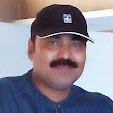
About Me

My photo
New Delhi, NCR of Delhi, India
I am an Indian, a Yadav from (Madhepura) Bihar, a social and political activist, a College Professor at University of Delhi and a nationalist.,a fighter,dedicated to the cause of the downtrodden.....

Monday, March 6, 2023

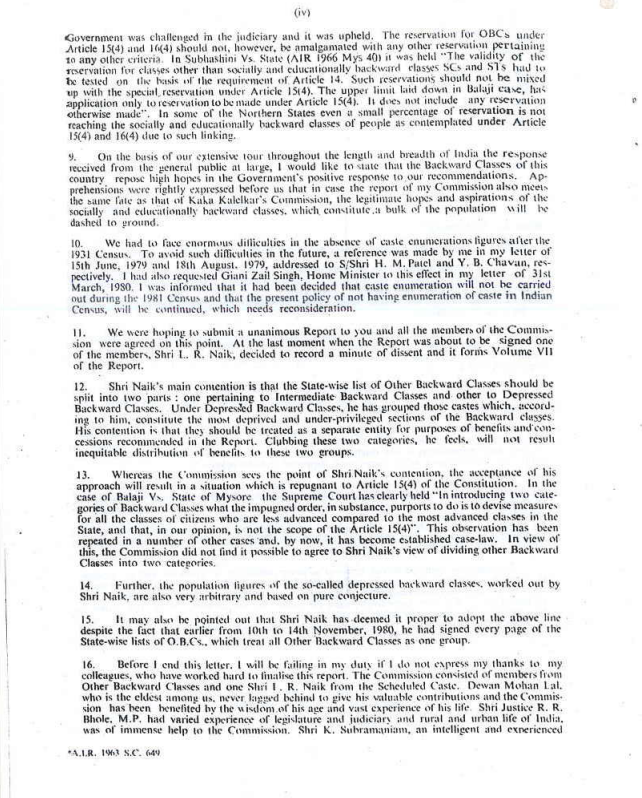
Forwarding Letter of B. P. MANDAL, CHAIRMAN, BACKWARD CLASSES COMMISSION, in the Mandal Commission Report :

 Forwarding Letter of B. P. MANDAL, CHAIRMAN, BACKWARD CLASSES COMMISSION, GOVERNMENT OF INDIA,5. Dr. Rajendra Prasad Road, New Delhi.

Dated: December 31, 1980, in the Mandal Commission Report :


Respected Rashtrapatiji.
By the grace of God Almighty. I have got the privilege of presenting this report to you.
2. On the 20th December, 1978, Shri Morarjibhai, the then Prime Minister of India announced on the floor of the parliament the decision to appoint Backward Classes Commission under my Chairmanship, with four other members. They were: Shri Dewan Mohan Lal. Shri R. R. Bhole, Shri Dina Bandha Sahu and Shri K. Subramaniam. The terms of reference were also announced on the floor of the House.
3. One of our Members, Shri Dina Bandhu Sahu. resigned his membership on 5th November, 1979 on grounds of health. He left this world on 7th October, 1980. We are sorry to have lost his valuable services in the midst of our work. The vacancy caused by his resignation was filled up by appointing Shri L. R. Naik.
4. We started our work after the inaugural speech of Shri Morarjibhai Desai, Prime Minister of India on 21st March, 1979 and ended with the valedictory Address by Smt. Indira Gandhi, Prime
Minister of India on 12th December, 1980.
5. It may be mentioned that although this Commission was appointed by previous Janata Government, Smt. Indira Gandhi's Government not only gave two extensions but extended all support and co-operations in the discharge of our work. This clearly shows her devotion and commitment to the cause of the suppressed, depressed and the oppressed.
6. The Commission had to face many difficulties and challenges in carrying out its work like the dissolution of Lok Sabha in July 1979, followed by further dissolution of nine State Assemblies in March 1980. As the State machineries were engaged in preparation for polls, the Commission's work had to be slowed down. The Commission got three extensions, first for three months from 1st January to 31st March, 1980 and two more extensions from 1st April to 30th September and 1st October to 31st December, 1980. In spite of all these difficulties and time constraints, the Com- mission finished its work in a short period of less than two years.
7. Our task was confined to our terms of reference according to which we had to "determine the criteria for defining the socially and educationally backward classes" and "to recommend steps to be taken for the advancements of the socially and educationally backward classes of citizens so identified". We have, accordingly, fixed the criteria for the identification of such classes and recommended the steps to be taken for their upliftment. The necessary law laid down by the Supreme Court regarding the maximum quantum of reservation for the socially and educationally backward classes, under the meaning of Article 15(4) and 16(4) has also been kept in view in our report.
8. Our report, however, does not stand in the way of the States if they want to take any measure for the upliftment of the weaker sections of the people like the women and the poorer and others who are not covered by our terms of reference. It may be noted that there is no bar jo make further reservation for them. For example, the Karnataka Government has reserved 48% seats for the socially and educationally backward classes, which includes SCs, STs and OBCs and further more 18% has been earmarked for the other weaker sections. The total reservation of 66% of that Government was challenged in the judiciary and it was upheld. The reservation for OBCs under Article 15(4) and 16(4) should not, however, be amalgamated with any other reservation pertaining to any other criteria In Subhashini Vs State (AIR 1966 Mys 401 it was held "The validity of the reservation for classes other than socially and educationally backward classes SCS and STS had to he tested on the basis of the requirement of Article 14. Such reservations should not be mixed up with the special reservation under Article 1514). The upper limit laid down in Balaji case, has application only to reservation to be made under Article 15(4). 11 does not include any reservation otherwise made". In some of the Northern States even a small percentage of reservation is not reaching the socially and educationally backward classes of people as contemplated under Article 15(4) and 16(4) due to such linking.
9. On the basis of our extensive tour throughout the length and breadth of India the response received from the general public at large, I would like to state that the Backward Classes of this country repose high hopes in the Government's positive response to our recommendations. Ap- prehensions were rightly expressed before us that in case the report of my Commission also meets the same fate as that of Kaka Kalelkar's Commission, the legitimate hopes and aspirations of the socially and educationally backward classes, which constitute a bulk of the population will be dashed to ground.
10. We had to face enormous difliculties in the absence of caste enumerations figures after the 1931 Census. To avoid such difficulties in the future, a reference was made by me in my letter of 15th June, 1979 and 18th August. 1979, addressed to S/Shri H. M. Patel and Y. B. Chavan, respectively. I had also requested Giani Zail Singh, Home Minister to this effect in my letter of 31st March, 1980. I was informed that it had been decided that caste enumeration will not be carried out during the 1981 Census and that the present policy of not having enumeration of caste in Indian Census, will be continued, which needs reconsideration.
11. We were hoping to submit a unanimous Report to you and all the members of the Commis sion were agreed on this point. At the last moment when the Report was about to be signed one of the members, Shri L. R. Naik, decided to record a minute of dissent and it forms Volume VII of the Report.
12. Shri Naik's main contention is that the State-wise list of Other Backward Classes should be split into two parts: one pertaining to Intermediate Backward Classes and other to Depressed Backward Classes. Under Depressed Backward Classes, he has grouped those castes which, accord- ing to him, constitute the most deprived and under-privileged sections of the Backward classes His contention is that they should be treated as a separate entity for purposes of benefits and con- cessions recommended in the Report. Clubbing these two categories, he feels, will not result. inequitable distribution of benefits to these two groups.
13. Whereas the Commission sees the point of Shri Naik's contention, the acceptance of his approach will result in a situation which is repugnant to Article 15(4) of the Constitution. In the case of Balaji V State of Mysore the Supreme Court has clearly held "In introducing two categories of Backward Classes what the impugned order, in substance, purports to do is to devise measures for all the classes of citizens who are less advanced compared to the most advanced classes in the State, and that, in our opinion, is not the scope of the Article 15(4)". This observation has been repeated in a number of other cases and. by now, it has become established case-law. In view of this, the Commission did not find it possible to agree to Shri Naik's view of dividing other Backward Classes into two categories.
14. Further, the population ligures of the so-called depressed backward classes, worked out by Shri Naik, are also very arbitrary and based on pure conjecture.
15. It may also be pointed out that Shri Naik has deemed it proper to adopt the above line despite the fact that earlier from 10th to 14th November, 1980, he had signed every page of the State-wise lists of O.B.Cs, which treat all Other Backward Classes as one group.
16. Before I end this letter. I will be failing in my duty if I do not express my thanks to my colleagues, who have worked hard to finalise this report. The Commission consisted of members from Other Backward Classes and one Shri L. R. Naik from the Scheduled Caste. Dewan Mohan Lal. who is the eldest among us, never lagged behind to give his valuable contributions and the Commission has been benefited by the wisdom of his age and vast experience of his life Shri Justice R. R. Bhole. M.P. had varied experience of legislature and judiciary and rural and urban life of India, was of immense help to the Commission. Shri K. Subramaniam, an intelligent and experienced person, having had varied experience of rural life besides journalism and devoted to the service of the down trodden had made valuable contribution to the Commission. Shri L. R. Naik, who was appointed in the Commission after a lapse of several months, was the most hard working member in our lot. When other members were getting tired to continue the extensive tour of the country, he was ever unfatigued.
17. I have this signal privilege of submitting this report to you and hope you will have no hesita- tion in accepting our recommendations and redress the long felt grievances of the socially and edu cationally backward classes of our country.
With regards,
Yours sincerely,
Sd/-
(B. P. MANDAL)


Shri Neelam Sanjiva Reddy,
President of India.
Rashtrapati Bhavan,
New Delhi.
(*A.I.R. 1963 S.C. 649)



Saturday, March 4, 2023

मुरहो एस्टेट के मंडल परिवार का गौरवशाली अतीत : 1923 में बिहार उड़ीसा विधान परिषद के निर्वाचित सदस्य : बाबू भुवनेश्वरी प्रसाद मंडल


बाबू भुवनेश्वरी प्रसाद मंडल, प्रसिद्द स्वतंत्रता सेनानी, समाज सुधारक और बिहार से भारतीय राष्ट्रीय कांग्रेस के संस्थापक सदस्य बाबू रास बिहारी लाल मंडल के ज्येष्ठ पुत्र,(अन्य दो पुत्र बाबू कमलेश्वरी प्रसाद मंडल और बाबू बिंदेश्वरी प्रसाद मंडल / #BPMandal ), 1923 में बिहार उड़ीसा विधान परिषद के लिए, आज के संसदीय निर्वाचन क्षेत्र से तीन या चार गुना बड़े निर्वाचन क्षेत्र से चुने गए थे। भुवनेश्वरी बाबू लगभग 1932 से 1948 तक भागलपुर डिस्ट्रिक्ट बोर्ड के निर्वाचित चेयरमैन थे।
भारत सरकार अधिनियम 1919 के माध्यम से अधिनियमित मोंटेग्यू-चेम्सफोर्ड सुधारों ने बिहार और उड़ीसा विधान परिषद को 43 से 103 सदस्यों तक विस्तारित किया। विधान परिषद में अब 2 पदेन कार्यकारी पार्षद, 25 नामांकित सदस्य (12 आधिकारिक, 13 गैर-सरकारी) और 76 निर्वाचित सदस्य (48 गैर-मुस्लिम, 18 मुस्लिम, 1 यूरोपीय, 3 वाणिज्य और उद्योग, 5 जमींदार और विश्वविद्यालय निर्वाचन क्षेत्र 1 सदस्य शामिल किये गए। सुधारों के Dyarchy सिद्धांत को भी पेश किया, जिससे कृषि, स्वास्थ्य, शिक्षा और स्थानीय सरकार जैसी कुछ जिम्मेदारियां निर्वाचित मंत्रियों को स्थानांतरित कर दी गईं।
1923 में विस्तारित सदन के लिए हुए चुनाव में, 103 सदस्यों में से, वे सूची में मध्य भागलपुर गैर मुहम्मडन ग्रामीण निर्वाचन क्षेत्र (लिस्ट में संख्या 54) से सदन में चुने गए पिछड़े वर्ग के एकमात्र सदस्य थे।
दलित वर्ग के दो सदस्यों को मनोनीत किया गया था।
अन्य सभी सदस्य उच्च जाति के थे या अँगरेज़ थे।
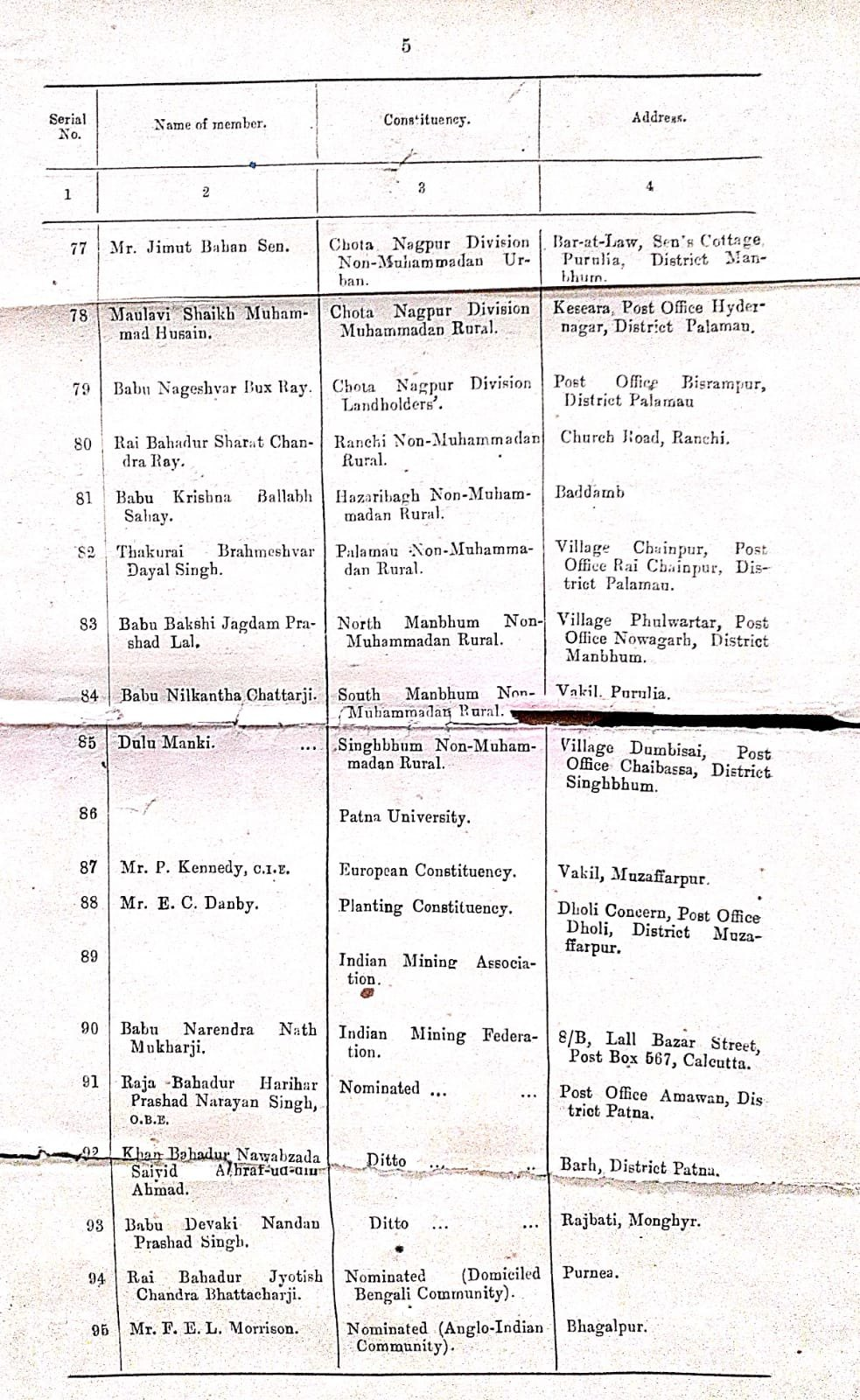
मैं उनकी तस्वीर साझा कर रहा हूं जिसमें उनके सबसे बड़े बेटे न्यायमूर्ति राजेश्वर प्रसाद मंडल भी लॉन टेनिस रैकेट पकड़े हुए दिखाई दे रहे हैं, और माननीय सदस्यों की सूची, जिसमें पहले पृष्ठ पर उनका नाम उनकी खुद की लिखावट में है।
बिहार और उड़ीसा विधान परिषद
1924-29
माननीय खान बहादुर ख्वाजा मुहम्मद नूर - राष्ट्रपति।
चौधरी भगरात प्रसाद सामंतराय महापात्रा - उप अध्यक्ष।
श्री जे. ए. सॉन्डर्स, आईसीएस-सचिव।
माननीय सदस्य :
1. माननीय श्री मैकफर्सन, आईसीएस
2. माननीय श्री एस. सिन्हा।
3. माननीय सर सैय्यद मुहम्मद फखर-उद-दीन। खान बाबादुर (मंत्री)।
4, माननीय बाबू गणेश दत्ता सिंह (मंत्री)।
5. श्री ई. एल. एल. हैमंड (मनोनीत)।
6. श्री ई.एल. टान्नर। (मनोनीत)।
7. श्री जे.आर. दैन। (मनोनीत)।
8. श्री ए. एल. इंग्लिस (मनोनीत)।
9. श्री बी.ए. कोलिन्स। (मनोनीत)।
10. श्री डब्ल्यू.एस. ब्रेमनर, सीआईई (नामित)।
11. श्री एच. एल.आई. एल एलनसन। (मनोनीत)।
12. कर्नल एच. आइंसवर्थ। (मनोनीत)।
13. श्री बी.सी. सेन (मनोनीत)।
14. श्री डब्ल्यू स्वेन, सीआईई। (मनोनीत)।
15. श्री एच लैम्बर्ट (मनोनीत)।
16. श्री डब्ल्यू बी हेकॉक (मनोनीत)।
17. बाबू श्याम नारायण सिन्हा शर्मा - पटना प्रमंडल गैर मुस्लिम शहरी
18. श्री मुहम्मद यूनुस - पटना प्रमंडल मोहम्मडन अर्बन
19. बाबू चंडीपत सहाय। -पटना संभाग भूमि धारक।
20. महाराजा बहादुर गुरु महादेवाश्रम प्रसाद साही। पटना गैर-मोहम्मडन शहरी।
21. बाबू राजनधारी सिन्हा। पश्चिम पटना गैर-मोहम्मडन ग्रामीण
22. बाबू गुरु शाही लाल पूर्वी पटना गैर-मुहम्मडन ग्रामीण।
23. मौलवी सैय्यद मुहम्मद हुसैन - पूर्वी पटना मुहम्मडन ग्रामीण।
24. बाबू गुप्तेश्वर प्रसाद सिंह। पश्चिम गया गैर-मुबम्मदान ग्रामीण।
25. बाबू बिशुन प्रसाद। मध्य गया गैर-मुहम्मडन ग्रामीण
26. बाबू रामेश्वर प्रसाद सिंह। पूर्वी गया गैर-मुहम्मदें ग्रामीण।
27. खान बहादुर अशफाक इलुसैन।- गया मुहम्मडन रूरल
28. बाबू द्वारिका प्रसाद सिंह। आरा गैर-मुहम्मडन ग्रामीण।
29. बाबा शारदा प्रसाद सिंह - केंद्रीय शाहाबाद गैर-मुस्लिम ग्रामीण।
30. बाबू राजीवरंजन प्रसाद सिन्हा।- दक्षिण शाहाबाद गैर-मुस्लिम ग्रामीण।
31. श्री सैयद मुहम्मद अतहर हुसैन। - शाहाबाद मुहम्मडन ग्रामीण।
32. राय बहादुर द्वारिका नाथ। तिरहुत प्रमंडल गैर मुहम्मडन शहरी।
33. मौलवी मति-उर रहमान। - तिरहुत प्रमंडल मुबम्मदान अर्बन।
34. राय बहादुर कृष्णदेव नारायण महथा - तिरहुत संभाग के भू-स्वामी।
35. बाबू जलेश्वर प्रसाद। - उत्तर सारण गैर-मुहम्मडन ग्रामीण।
36. बाबू चंद्रकेतु नारायण सिंह।- दक्षिण सारण गैर-मुहम्मद-मदन कुराल।
37. मौलवी सैय्यद मुबारक अली -सारण मुहम्मदन ग्रामीण
38. बाबू लक्ष्मी मोहन मिश्रा। - उत्तरी चंपारण गैर मुस्लिम ग्रामीण।
39. बाबू केदारनाथ प्रसाद साह - दक्षिण चैनपरोन गैर-माबामदान ग्रामीण।
40. मौलवी मुहम्मद ज़बूरुल हक़- चंपारण मुहम्मडन रूरल।
41. बाबू शिव बचन सिन्हा। उत्तर मुजफ्फरपुर गैर मुस्लिम ग्रामीण।
42. महंत दर्शन दासजी। - पूर्वी मुजफ्फरपुर गैर मुहम्मडन ग्रामीण।
43. बाबू राधा कृष्ण। - हाजीपुर गैर-मुहम्मद- मदन ग्रामीण।
44. मौलवी सैय्यद मेंहदी हसन। - मुजफ्फरपुर मुहम्मडन ग्रामीण।
45. महंत ईश्वर गिर। - उत्तर-पश्चिम दरभंगा गैर-मुहम्मडन ग्रामीण।
46. बाबू शिव शंकर झा। - उत्तर-पूर्व दरभंगा गैर-मुहम्मडन ग्रामीण
47. बाबू राम निबोरा सिंह। - दक्षिण-पूर्व दरभंगा गैर-मुहम्मडन ग्रामीण
48. बाबू रामाश्रय प्रसाद चौधरी, - समस्तीपुर गैर-मुहम्मडन ग्रामीण
49. मौलवी सैद-उल हक। - दरभंगा मुहम्मडन ग्रामीण।
50. बाबू मुरलीधर श्रॉफ। -भागलपुर संभाग गैर-मुस्लिम शहरी।
51, श्री अब्दुल वहाब खान। भागलपुर डिवीजन मुहम्मडन शहरी ..
52. राजा बाबादुर कीर्त्यानंद सिंह। भागलपुर संभाग के जमींदार।
53. बाबू राजेन्द्र मिश्र। - उत्तर भागलपुर गैर मुहम्मदाव ग्रामीण।
54. बाबू भुवनेश्वरी प्रसाद मंडल। मध्य भागलपुर गैर-मुहम्मडन ग्रामीण।
ग्राम मुरहो, डाकघर मधेपुरा, जिला भागलपुर।
55. बाबू अनंत प्रसाद..- दक्षिण भागलौर गैर-मुस्लिम ग्रामीण।
56. खान बहादुर सईद मुहम्मद नईम - भागलपुर मुहम्मदन भागलपुर। ग्रामीण।
57. राय बहादुर लछमी प्रसाद सिन्हा। - पूर्वी मुंगेर गैर-मुहम्मडन ग्रामीण।
58. राय साहिब खड़ग नारायण - उत्तर-पश्चिम मुंगेर गैर-मुहम्मडन ग्रामीण।
59. महाराजा बहादुर चंद्र मौलेश्वर प्रसाद सिंह - दक्षिण-पश्चिम मुंगेर गैर मुहम्मडन ग्रामीण
60. श्री शाह मुहम्मद याह्या। - मोंगबीर महामदान ग्रामीण।
61. राय बहादुर पृथ्वीवी चंद लाल चौधरी। - पूर्णिया गैर-मुहम्मडन ग्रामीण।
62. श्री सैय्यद मोइन-उद-दीन मिर्जा। - किशनगंज मुहम्मडन ग्रामीण।
63. मौलवी मीर फैयाज अली। पूर्णिया ग्रामीण। मुसलमान
64. बाबू जोगेंद्र नारायण सिंह। - संथाल परगना (उत्तर) गैर-मुहम्मडन ग्रामीण
65. बाबू रामेश्वर लाल मारवाड़ी। - संथाल परगना (दक्षिण) गैर-मुहम्मडन ग्रामीण।
66. मनियावी मुहम्मद उम्मिदी अली। -संथाई परगना मुकमम्मन ग्रामीण।
67 श्री मधुसूदन दास, सी.एल.ई. - उड़ीसा डिवीजन गैर-मुहम्मडन शहरी।
68. मौलवी सैय्यद तजम्मुल अली। उड़ीसा डिवीजन मुहम्मद-मदन ग्रामीण।
69. राजा राजेंद्र नारायण भंजदेव, ओ.बी.ई. उड़ीसा प्रभाग, भू-धारक'।
70. बाबू बीराबर नारायण चंद्र धीर नरेंद्र। उत्तरी कटक गैर-मुहम्मडन ग्रामीण
71. बाबू लक्ष्मीबार महंती - दक्षिण कटक गैर-मुस्लिम ग्रामीण।
72. बाबू राधारंजन दास। -उत्तरी बालासोर गैर-मुहम्मडन ग्रामीण.-
73. चौधरी भगवत प्रसाद सामंतराय महापात्रा, उप राष्ट्रपति। दक्षिण बालासोर, गैर-मुहम्मदम ग्रामीण
74. बाबू गोदावरी मिश्रा। -उत्तरी पुरी, गैर महम्मदान ग्रामीण।
75. बाबू जगबंधु सिन्हा। - दक्षिण पुरी गैर मुहम्मडन ग्रामीण।
76. बाबू राम नारायण मिश्रा। - संबलपुर गैर-मुहम्मद ग्रामीण,
77. श्री जीमूत बहन सेन छोटा नागपुर डिवीजन गैर-मुहम्मडन शहरी।
78. मौलवी शेख मुहम्मद हुसैन। - छोटा नागपुर मंडल मुहम्मदन ग्रामीण।
79. बाबू नागेश्वर बक्स रे। - छोटा नागपुर डिवीजन पोस्ट लैंडहोल्डर्स'।
80. राय बहादुर शरत चंद्र रे।- रांची गैर-मुहम्मडन ग्रामीण।
81. बाबू कृष्ण बल्लभ सहाय। हजारीबाग गैर-मुहम्मडन ग्रामीण।
82. ठकुराई ब्रह्मेश्वर दयाल सिंह। पलामू गैर-मुहम्मडन ग्रामीण।
83. बाबू बख्शी जगदम प्रसाद लाल। उत्तर मानभूम गैर-मुहम्मडन ग्रामीण।
84. बाबू नीलकंठ चटर्जी। दक्षिण मानभूम गैर-मुहम्मडन ग्रामीण।
85. दुलु मानकी। -सिंगबबम गैर-मुहम्मडन ग्रामीण।
86. ********* पटना विश्वविद्यालय।
87. श्री पी. कैनेडी, सीआईई। यूरोपीय निर्वाचन क्षेत्र। रोपण निर्वाचन क्षेत्र।
88. श्री ई. सी. डेनबी.. ढोली कंसर्न
89. ********** इंडियन माइनिंग एसोसिएशन।
90. बाबू नरेंद्र नाथ मुखर्जी। इंडियन माइनिंग फेडरेशन
91. राजा बहादुर हरिहर प्रसाद नारायण सिंह, ओ.बी.ई. मनोनीत...
92. खान बहादुर नवाबजादा सैय्यद अल्ह्रफ-उद-अहमद। मनोनीत।
93. बाबू देवकी नंदन प्रसाद सिंह। मनोनीत।
94. राय बहादुर ज्योतिष चंद्र भट्टाचार्य। नामांकित (अधिवासित बंगाली समुदाय)।
95. श्री एफ.ई.एल. मॉरिसन। - मनोनीत (एंग्लो-इंडियन कम्युनिटी)।
96. रेवरेंड इमानुएल सुख। - मनोनीत दलित वर्ग।
97. बाबू विश्वनाथ कार - मनोनीत दलित वर्ग।
98. रेव. ई.एच.. व्हिटली। - नामांकित आदिवासी।
99. रेवरेंड प्रीतम लूथर सिंह - मनोनीत आदिवासी।
100. लाला बैज नाथ। - मनोनीत श्रमिक वर्ग।
101. श्री धनजीशाह मेहरजी- भाई मदन। - बागान और खनन के अलावा नामांकित औद्योगिक हित।
102. रेव. एस.के. तरफदार। नामांकित भारतीय ईसाई समुदाय।
103. श्री जे.ए. सॉन्डर्स, सचिव। पटना।
* सूची का अंत
बी और ओ। जी.पी. (एल.सी.) नं. 114-200-8-2-1924.-जे.एम.आर.
डॉ सूरज यादव मंडल द्वारा टाइप की गई सूची :
All reactions:
Suraj Yadav and 4 others

Glorious Past of Mandal Family of Murho Estate : Babu Bhuvneshwari Prasad Mandal, Elected member of Bihar Orissa Legislative Council in 1923.

 Babu Bhuvneshwari Prasad Mandal, eldest son of Babu Rash Behari Lal Mandal, Freedom Fighter, Social reformer and founder Member of Indian National Congress from Bihar, (the other two sons being Babu Kamleshwari Parasad Mandal and Babu Bindeshwari Prasad Mandal or #BPMandal ), my grandfather, was elected to Bihar Orissa Legislative Council in 1923, from a constituency three or four times bigger than todays Parliamentary Constituency.

The Montagu–Chelmsford Reforms enacted through the Government of India Act 1919 expanded the Bihar & Orissa Legislative Council from 43 to 103 members. The Legislative Council now consisted of 2 ex-officio Executive Councillors, 25 nominated members (12 official, 13 non-official) and 76 elected members (48 Non-Muslim, 18 Muslim, 1 European, 3 Commerce & Industry, 5 Landholders and 1 University constituencies). The reforms also introduced the principle of dyarchy, whereby certain responsibilities such as agriculture, health, education, and local government, were transferred to elected ministers.
In the election held for the expanded house in 1923, of the 103 members, he was the only member belonging to the Backward Classes elected in the house from Central Bhagalpur Non Muhammadan Rural Constituency Number 54 in the List.
Two members of Depressed Classes were nominated.
All the other members belonged to upper caste.
I am sharing his photo in which his elsest son Justice Rajeshwar Prasad Mandal is also seen holding a lawn tennis racket, and the image of the List of Hon'ble Members which has his name in the first page in his own handwriting.

BIHAR AND ORISSA LEGISLATIVE COUNCIL

1924-29

The Hon'ble Khan Bahadur KHWAJA MUHAMMAD NUR - President.

Chaudhuri BHAGARAT PRASHAD SAMANTARAI MAHAPATRA -Deputy President.

 Mr. J. A. SAUNDERS, ICS.-Secretary.

Hon’ble MEMBERS :

1.  The Hon'ble Mr. McPherson, ICS

2.  The Hon'ble Mr. S. Sinha.

3. The Hon'ble Sir Saiyid Muhammad Fakhr-ud-din. Khan Babadur  (Minister).

4, The Hon'ble Babu Ganesh Datta Singh (Minister).

5. Mr. E. L. L. Hammond (Nominated).

6. Mr. E. L. Tanner.  (Nominated).

7. Mr. J. R. Dain. (Nominated).

8. Mr. A. L. Inglis  (Nominated).

9. Mr. B. A. Collins. (Nominated).

10. Mr. W. S. Bremner, CIE (Nominated).

11. Mr. H. Ll. L. Allanson. (Nominated).

12. Col. H. Ainsworth. (Nominated).

13. Mr. B. C. Sen. (Nominated).

14. Mr. W. Swain, CIE. (Nominated).

15. Mr H Lambert (Nominated).

16. Mr W B Heycock (Nominated).

17. Babu Shyam Narain Sinha Sharma  - Patna Division Non-Mohammadan Urban

18.Mr Muhammad Yunus – Patna Division Mohammadan Urban

19. Babu Chandipat Sahay. – Patna Divison Land Holders.

20.  Maharaja Bahadur Guru Mahadevashram Prashad Sahi. Patn Non-Mohammadan Urban.

21. Babu Rajandhari Sinha. West Patna Non-Mohammadan Rural

22. Babu Guru Shai Lal East Patna Non-Muhammadan Rural.

23. Maulavi Saiyid Muhammad Hussain - East Patna Muhammadan Rural.

24. Babu Gupteshvar Prashad Singh. West Gaya Non-Mubammadan Rural.

25. Babu Bishun Prashad. Central Gaya Non-Muhammadan Rural

26. Babu Rameshvar Prashad Singh. East Gaya Non-Muhammaden Rural.

27. Khan Bahadur Ashfaq Ilusain.- Gaya Muhammadan Rural

28. Babu Dvarika Prashad Singh. Arrah Non-Muhammadan Rural.

29. Baba Sarada Prashad Singh - Central Shahabad Non- Muhammadan Rural.

30. Babu Rajivaranjan Pra shad Sinha.- South Shahabad Non- Muhammadan Rural.

31. Mr. Saiyid Muhammad Athar Husain. - Shahabad Muhammadan Rural.

32. Rai Bahadur Dvarika Nath. Tirhut Division Non- Muhammadan Urban.

33. Maulavi Mati-ur Rahman. - Tirhut Division Mubammadan Urban.

34. Rai Bahadur Krishna Deva Narayan Mahtha - Tirhut Division Landholders'.

35. Babu Jaleshvar Prashad. - North Saran Non-Muhammadan Rural.

36. Babu Chandraketu Narayan Singh.- South Saran Non-Muham- madan Kural.

37. Maulavi Saiyid Mubarak Ali -Saran Muhammadan Rural

38. Babu Lakshmi Mohan Misra. - North Champaran Non- Muhammadan Rural.

39. Babu Kedarnath Prashad Sah - South Chainparon Non- Mabammadan Rural.

40. Maulavi Muhammad Zaburul Haqq- Champaran Muhammadan Rural.

41. Babu Shiva Bachan Sinha. North Muzaffarpur Non- Muhammadan Rural.

42. Mahanth Darshan Dasji. - East Muzaffarpur Non- Muhammadan Rural.

43. Babu Radha Krishna. - Hajipur Non-Muham- madan Rural.

44. Maulavi Saiyid Mehdi Hasan. - Muzaffarpur Muhammadan Rural.

45. Mahanth Ishvar Gir. - North-West Darbhanga Non-Muhammadan Rural.

46. Babu Shiva Shankar Jha. - North-East Darbhanga Non-Muhammadan Rural

47. Babu Ram Nibora Singh. - South-East Darbhanga Non-Muhammadan Rural

48. Babu Ramasray Prashad Chaudhuri, - Samastipur Non-Muhammadan Rural

49. Maulavi Said-ul Haqq. - Darbhanga Muhammadan Rural.

50. Babu Murlidhar Shroff. -Bhagalpur Division Non- Muhammadan Urban.

51, Mr. Abdul Wahab Khan. Bhagalpur Division Muhammadan Urban..

52. Raja Babadur Kirtyanand Singh. Bhagalpur Division Landholders.

53. Babu Rajendra Misra. - North Bhagalpur Non- Muhammadao Rural.

54. Babu. Bhuvaneshvari Prashad Mandal. Central Bhagalpur Non- Muhammadan Rural.

Village Murho, Post Office Madhipura,

District Bhagalpur.

55. Babu Anant Prashad..- South Bhagalour Non- Muhammadan Rural.

56. Khan Bahadur Sayid Muhammad Naim - Bhagalpur Muhammadan Bhagalpur.Rural.

57. Rai Bahadur Lachhmi Prashad Sinha. - East Monghyr Non-Muhammadan Rural.

58. Rai Sahib Kharag Narayan - North-West Monghyr Non-Muhammadan Rural.

59. Maharaja Bahadur Chandra Mauleshvar Prashad Singh -South-West Monghyr  Non         Muhammadan Rural

60. Mr. Shah Muhammad Yahya. - Mongbyr Mahammadan Rural.

61. Rai Bahadur Pritliwi Chand Lall Chowdry. - Purnea Non-Muhammadan Rural.

62. Mr. Saiyid Moin-ud-din Mirza. - Kishanganj Muhammadan Rural.

63.  Maulavi Mir Faiyaz Ali. Purnea Rural. Muhammadan

64. Babu Jogendra Narayan Singh. - Santhal Parganas (North) Non-Muhammadan Rural

65. Babu Rameshvar Lal Marwari. - Santhal Parganas (South) Non-Muhammadan Rural.

66. Maniavi Muhammad Umidy Ali. - Santhai Parganas Mukammadan Rural.

67 Mr. Madhusudan Das, C.L.E. - Orissa Division Non- Muhammadan Urban.

68. Maulavi Saiyid Tajamul Ali. Orisss Division Muham- madan Rural.

69. Raja Rajendra Narayan Bhanja Deo, O.B.E. Orissa Division, Land- holders'.

70. Babu Birabar Narayan Chandra Dhir Narendra. North Cuttack Non- Muhammedan Rural

71. Babu Lakshmidbar Mahanti -  South Cuttack Non- Muhammadan Rural.

72.Babu Radharanjan Das. -North Balasore Non- Muhammadan Rural.-

73. Chaudhuri Bhagabat Prashad Samantarai Mahapatra, Deputy President. South Balasore, Non- Muhammadam Rural

74. Babu Godavaris Misra. -North Puri, Non-Mehammadan Rural.

75. Babu Jagabandhu Sinha. - South Puri Non Muhammadan Rural.

76. Babu Ram Narayan Misra. - Sambalpur Non-Muhammadan Rural,

77. Mr. Jimut Bahan Sen. Chota Nagpur Division Non-Muhammadan Urban.

78. Maulavi Shaikh Muhammad Husain. - Chota Nagpur Division Muhammadan Rural.

79. Babu Nageshvar Bux Ray. - Chota Nagpur Division Post Landholders'.

80. Rai Bahadur Sharat Chandra Ray.- Ranchi Non-Muhammadan Rural.

81. Babu Krishna Ballabh Sahay.  Hazaribagh Non-Muhammadan Rural.

82. Thakurai Brahmeshvar Dayal Singh. Palamau Non-Muhammadan Rural.

83. Babu Bakshi Jagdam Prashad Lal. North Manbhum Non- Muhammadan Rural.

84. Babu Nilkantha Chattarji. South Manbhum Non- Muhammadan Rural.

85. Dulu Manki. -Singbbbum Non-Muhammadan Rural.

86. *********  Patna University.

87. Mr. P. Kennedy, CIE. European Constituency. Planting Constituency.

88. Mr. E. C. Danby.. Dholi Concern

89. ********** Indian Mining Associa- tion.

90. Babu Narendra Nath Mukharji. Indian Mining Federation.

91. Raja Bahadur Harihar Prashad Narayan Singh, O.B.E. Nominated...

92. Khan Bahadur Nawabzada Saiyid Alhraf-ud-au Ahmad. Nominated.

93. Babu Devaki Nandan Prashad Singh. Nominated.

94. Rai Bahadur Jyotish Chandra Bhattacharji. Nominated (Domiciled Bengali Community).

95. Mr. F. E. L. Morrison. - Nominated (Anglo-Indian Community).

96. Rev. Emanuel Sukh. - Nominated  Depressed Classes.

97. Babu Bishwa Nath Kar. - Nominated  Depressed Classes.

 98. Rev. E. H.. Whitley. – Nominated Aborigines.

99. Rev. Prittam Luther Singh - Nominated Aborigines.

100. Lala Baij Nath. - Nominated Labouring Classes.

101. Mr. Dhanjishah Meherji- bhai Madan. – Nominated Industrial Interests other than Plantation and Mining.

102. Rev. S. K. Tarafdar. Nominated Indian Christian Community.

103. Mr. J. A. Saunders, Secretary. Patna.

*End of List

B.&O. G. P. (L. C) No. 114-200-8-2-1924.-J.M.R.


Saturday, August 1, 2020

क्रीमी लेयर : आरक्षण पर हमला आरएसएस एजेंडा :

आरक्षण ऐसा कर देंगे कि इसका कोई मतलब नहीं रह जायेगा : भाजपा /आरएसएस 
 * रोजगार ख़त्म तो आरक्षण कहाँ? 
 * सरकारी प्रतिष्ठानों को निजी हाँथों में बेच देने पर आरक्षण समाप्त क्योंकि निजी क्षेत्र में आरक्षण नहीं 
 * लेटरल एंट्री के तहत आईएएस IAS में केंद्र सरकार के ज्वॉइंट सेक्रेटरी के शीर्ष पद पर, बिना परीक्षा / आरक्षण के सवर्णों की सीधी नियुक्ति। 
* उच्च न्यायिक व्यवस्था में आरक्षण नहीं। सर्वोच्च और उच्च न्यायालयों में 80 % ब्राह्मण। 
 * सर्वोच्च न्यायालय के माध्यम से आरक्षण निरस्त करने के नित्य नए आदेश : सरकार मौन। 
 * बिना डेटा के ओबीसी वर्गीकरण को कोशिश। 
 * मेडिकल एडमिशन वगैरह में बिना कोई नियम या कानून के ओबीसी आरक्षण समाप्त। 
 *आरक्षण के औचित्य पर प्रोपागंडा के तहत #गोदी_मीडिया में रोज प्रश्न, पर जाति जनगणना के आदेश नहीं.... आदि आदि। 
 अब क्रीमी लेयर के प्रावधान में फेर बदल कर लाखों ओबीसी को आरक्षण के दायरे से बाहर करने की साज़िश। सर्वोच्च न्यायालय में केस स्वीकार कर अनुसूचित जाति / जनजाति में भी क्रीमी लेयर लागू करने की कोशिश जारी..... 
 एक, क्रीमी लेयर असंवैधानिक है। दूसरा, अब उसके आय लिमिट बढ़ाने के नाम पर सैलेरी, खेती की आमदनी, गाँव की ज़मीन आदि को जोड़ने का प्रावधान कर आरक्षण को पूर्णतः आर्थिक आधार बना कर लाखों ओबीसी को इसके लाभ से वंचित कर दिया जाएगा। वैसे भी कहीं भी और कभी भी ओबीसी का 27% आरक्षण पूरा नहीं होता। इस सम्बंध में कोई डाटा सरकार के पास नहीं है। 
जाति जनगणना से स्थिति स्पष्ट हो जाती और देश के 54% से अधिक आबादी के साथ अन्याय और भेदभाव उजागर हो जाता। ओबीसी गणना से ओबीसी के हिस्से में आ रही नौकरी, संसाधन में हिस्सेदारी न पता चले, तो आरएसएस भाजपा मोदी की सरकार ने जाति जनगणना मना कर दिया है। 
आईये इस अन्याय के विरुद्ध आवाज उठाएं और संघर्ष करें। 

 जय मण्डल, जय भीम, जय भारत।

Wednesday, September 19, 2018

#DUSU चुनावों में #ईवीएम: भारत के चुनाव आयोग का इस सम्बन्धी 13.9.2018 का बयान क्यों भ्रामक है?


चुनाव आयोग ने दिल्ली विश्वविद्यालय छात्र संघ चुनाव में प्रयोग #ईवीएम से किसी तरह से लेने देने से इंकार किया है, जबकि पिछले ही वर्ष चुनाव आयोग की सहमति से दिल्ली विश्वविद्यालय को ईवीएम फिर से मुहैया किया गया। इसके पहले भी चुनाव आयोग के आदेश पर ही पहली बार सरकारी कंपनी ईसीआईएल ने दिल्ली विश्वविद्यालय को सन 2006 में ईवीएम सप्लाई किया था। कोई भी व्यक्ति या संस्था बिना चुनाव आयोग के आदेश के ईवीएम प्राप्त नहीं कर सकता।
कुछ तथ्य:
शैक्षणिक वर्ष 2005-2006 में स्वामी श्रद्धानन्द कॉलेज छात्र संघ के चुनाव अधिकारी के रूप में, मैंने ईवीएम मशीनों के द्वारा कॉलेज छात्र संघ चुनाव आयोजित करने के लिए ईवीएम मशीनों को उधार देने के लिए भारत के निर्वाचन आयोग से संपर्क किया था। वह पहली बार #ईवीएम का छात्र संघ चुनाव में प्रयोग होता।
चूंकि तब चुनाव बहुत नजदीक था,(2 सितंबर, 2005), अतः भारत का निर्वाचन आयोग, अपने दिनांक 25 अगस्त, 2005 के पत्र संख्या 51/8/4/2005-पीएलएन -4 से प्रिंसिपल, स्वामी श्रद्धानन्द कॉलेज को सूचित किया गया कि "आयोग आपके द्वारा अनुरोध किए गए इलेक्ट्रॉनिक वोटिंग मशीनों को उधार देने की स्थिति में नहीं है।" (उस समय का, बतौर चुनाव अधिकारी, मेरे द्वारा जारी प्रेस विज्ञप्ति की प्रति, संलग्न है।)
हालांकि, अगले वर्ष, 2006 में, दिल्ली विश्वविद्यालय ने घोषणा की कि आने वाले दिल्ली विश्वविद्यालय के छात्र संघ (डीयूएसयू) चुनाव एक से अधिक तरीकों से ऐतिहासिक होंगे। हाई-टेक जाकर, वे पार्टियों को एसएमएस और ई-मेल जैसे दिन के संचार उपकरण का उपयोग पर ध्यान देने की इच्छा रखते हैं। परन्तु विशेष बात यह थी कि इलेक्ट्रॉनिक वोटिंग मशीन (#ईवीएम) का इस्तेमाल देश के विश्वविद्यालय चुनावों में पहली बार किया जाना था।(यह समाचार 'द हिंदू' समेत कई समाचार पत्रों में यह रिपोर्ट छपा था। 24 अगस्त, 2006 'द हिन्दू' अखबार का स्क्रीनशॉट संलग्न है। लिंक है: Electronic voting machines for DUSU elections now https://www.thehindu.com/…/electronic-vo…/article3095105.ece....। (परसों से द हिन्दू ने इस लिंक से समाचार हटा लिया है। )
चुनाव आयोग ने विश्वविद्यालय की जरूरतों के अनुरूप विशेष रूप से डिजाइन की गई मशीनों का आदेश दिया था।
दिल्ली विश्वविद्यालय के तत्कालीन प्रोक्टर प्रोफेसर गुरमीत सिंह, जो वर्तमान में पांडिचेरी विश्वविद्यालय के कुलपति के रूप में कार्यरत हैं, ने उस समय कहा था कि, "विश्वविद्यालय को केवल 18 अगस्त को ही ईवीएम मशीनों के लिए औपचारिक अनुमति मिली।... इस ईवीएम में हमारे लिए अलग आवश्यक सुविधाएं देनी हैं। अलग अलग पोस्ट के लिए कई छात्र चुनाव लड़ेंगे। मशीन का इस्तेमाल कॉलेज यूनियन चुनावों के लिए भी किया जाएगा, इसलिए हम उन आम मशीनों का इस्तेमाल नहीं कर सकते थे जिनका इस्तेमाल आम चुनावों के लिए किया जाता था।''
ऐसा कहा जाता था कि ईसीआईएल ने ईसीआई के निर्देशों पर ईवीएम को दिल्ली विश्वविद्यालय को आपूर्ति की थी। यह वास्तव में दिलचस्प है कि भारत के निर्वाचन आयोग ने दिल्ली विश्वविद्यालय के छात्र संघ चुनावों में इस्तेमाल ईवीएम से किसी भी तरह से कोई लेने देने से इंकार कर दिया है। (चुनाव आयोग की 13.9.18 दिनांकित पत्र की प्रतिलिपि संलग्न है।)
उस समय दिल्ली विश्वविद्यालय ने मशीनों की लागत प्रत्येक मशीन के लिए अनुमानित राशि लगभग 10,000 रु प्रति मशीन माना था। प्रोफेसर गुरमीत सिंह ने कहा, "हम यह राशि अग्रिम एडवांस दे सकते हैं और फिर व्यय का एक हिस्सा कॉलेजों को स्थानांतरित कर सकते हैं। '
तदनुसार इसलिए सभी कालेजों को प्रत्येक चुनाव में #ईवीएम के इस्तेमाल के लिए कुछ राशि विश्वविद्यालय को देना पड़ता हैं। उदहारण के लिए पिछले वर्ष स्वामी श्रद्धानन्द कॉलेज छात्र संघ चुनाव के चुनाव अधिकारी के रूप में मैंने किंस्वे कैंप स्थित विश्वविद्यालय छात्र संघ चुनाव कण्ट्रोल रूम में ईवीएम वापस सौंपते समय 34,000/ - रुपये का डिमांड ड्राफ्ट सौंप कर, रसीद प्राप्त की।
पिछले साल, ईवीएम की समस्या फिर से हुई थी। चूंकि केवल कुछ ही ईवीएम दिए जाते हैं, जिससे मतदान के दौरान छात्रों की लंबी कतार हो जाती है, अतः हम, स्वामी श्रद्धानन्द कॉलेज की ओर से विश्वविद्यालय से अधिक ईवीएम मांगे थे। इस बीच, हमें पता चला कि विश्वविद्यालय भी ईवीएम की कमी के कारण समस्याओं का सामना कर रहा था और ईसीआई से अनुरोध किया था कि वह या तो ईवीएम किराए पर दे या विश्वविद्यालय को खरीदने की अनुमति दें, जैसा कि पहले किया गया था। प्रारंभ में, आयोग ने इनकार कर दिया, क्योंकि उन्होंने कुछ अन्य विश्वविद्यालयों से इनकार कर दिया था, लेकिन फिर आयोग की बैठक के बाद दिल्ली विश्वविद्यालय को #ईवीएम प्राप्त करने के बाद अनुमति दी गई थी। इस मामले की जानकारी संबंधित कार्यालयों के साथ उपलब्ध है।
अब ईवीएम के कार्यप्रणाली पर: हर साल, ईवीएम कंपनी के तकनीकी विशेषज्ञ, आवश्यकता के अनुसार ईवीएम को प्रोग्राम करने के लिए विश्वविद्यालय आते हैं। यह प्रग्रामिंग प्रति पद पर चुनाव लड़ रहे प्रत्याशियों के अनुरूप लिया जाता है। यह ध्यान रखना महत्वपूर्ण है कि अलग-अलग पदों के लिए अलग-अलग पोलिंग पैनल (मतदान बोर्ड की इकाइयां) होती हैं, जबकि वोट यानि सूचनाओं को संग्रहित करने के लिए एक ही नियंत्रण इकाई (कण्ट्रोल पैनल) होता है। इसमें परेशानियाँ हो सकती है। कुछ इसी तरह कि शिकायत 2018 में माननीय दिल्ली उच्च न्यायालय द्वारा निपटाए गए याचिका (संजय बनाम दिल्ली विश्वविद्यालय और अन्य) में उल्लिखित शिकायतें हो सकती हैं। इस पेटिशन में बताया गया कि एक ही कॉलेज में मतदान करने वाले एक ही संख्या के छात्रों के मतगणना में अलग अलग वोट पाए हए। विभिन्न पदों के लिए मतदान किए गए विभिन्न मतों से संबंधित पेटीशन के प्रासंगिक हिस्सों की प्रतिलिपि संलग्न है।
इस साल भी यह जानना महत्वपूर्ण है कि कौन से कॉलेज ईवीएम दोषपूर्ण थे?
(डॉ सूरज यादव)

#EVM in #DUSU Elections : why is ECI letter of 13 Sept, 2018 misleading?


Only last year ECI permitted Delhi University to procure more EVMs, just as in 2006, #EVMs in DUSU Elections were introduced with permission and consent of ECI from ECIL.
Some Facts:
As Election Officer for Swami Shraddhanand College Students Union in the Academic Year 2005-2006, I had approached the Election Commission of India for lending EVM Machines to conduct the College Students Union Elections with EVMs, which would have been for the first time.
The Election Commission of India, since the time for the elections (2nd September, 2005) was very short had vide letter No. 51/8/4/2005-PLN-IV, dated 25th August, 2005 informed the Principal, Swami Shraddhanand College that the "Commission is not in a position to lend Electronic Voting Machines as requested by you." (Copy of the Press Release issued by me then, as the Election Officer is attached.)
However, next year, that is in 2006, Delhi University announced that the upcoming Delhi University Students' Union (DUSU) elections will be historic in more ways than one. Going hi-tech, they will see parties vying for attention using the communication tools of the day like SMS and e-mails, while electronic voting machines (EVM) will perhaps be used for the first time in university elections in the country. (Reported in Newspapers, including The Hindu,August 24, 2006 : Screenshot attached, Link : Electronic voting machines for DUSU elections now https://www.thehindu.com/…/electronic-vo…/article3095105.ece..). (The news was removed by The Hindu from yesterday. However, screen shot and the matter is attached.)
The Election Commission had ordered specially designed machines to suit the needs of the University.
Prof Gurmeet Singh, the then Proctor, Delhi University, currently serving as the Vice Chancellor, Pondicherry University said, ""The University got formal permission for the machines only on August 18. The requirements we have are different. There is one post, which many students will be standing for. The machine will also be used for the college union elections, so we couldn't have used the same machines that were used for the general elections.''
It was said that ECIL, on instructions from ECI had supplied the EVMs to University of Delhi. It is indeed intriguing that why did Election Commission of India, hurriedly issued a letter (Dated 13.9.18, Copy attached), denying anything to do with the EVM in question at Delhi University Students Union Elections.
Further, Delhi University was working out the cost of the machines, is was stated that the rough estimate for each machine is about Rs. 10,000. The University was then trying to work out how to share the costs of the machines. Prof Gurmeet Singh added,"We might give an advance and then transfer a part of the expenditure to the college.'
Accordingly, every College using the EVM supplied by University of Delhi for the Students Union Election pay in Demand Draft, while handing back the EVMs at the Central Control Room. The amount varies as per use of the machines. Therefore, last year, ie in 2017, I, as Election Officer of Swami Shraddhanand College, personally handed over a Demand Draft, while I went along with Delhi Police escort to the Control Room at the Police Lines, Kingsway Camp, Delhi, an amount of Rs 34,000/-, as far as I remember, and obtained a receipt.
Last year, there was again a problem of EVMs. Since only few EVMs are given, leading to long queue of students during polling, we (Swami Shraddhanand College),had asked for more EVMs from the University . Meanwhile, we came to know that the University too was facing problems due to shortage of EVMs and had requested the ECI to either give EVMs on rent or allow the University to procure, as done earlier. Initially, the Commission refused, because they had also refused to some other Universities, but later permission was granted after a meeting of the Commission and University obtained EVMs. The information of the matter is available with concerned offices.
Now coming to the functioning of the EVMs : Every year, technical experts, from the Company come to the University to program the EVMs as per the requirement, that is the candidates and posts. It is important to note that while there are different balloting units for different posts, there is one and the same control unit for storing the information, ie the votes, number for different candidates contesting for different posts. There may be complaints, as reflected in a Petition (Sanjay Vs University of Delhi & ors) disposed by Hon'ble Delhi High Court in 2018, pertaining to different number of votes polled for different posts. (Copy of the relevant portions of the Petition attached.) Even this year it is important to know which College(s) EVMs were faulty?